Key Takeaways
- Cloud-based access control systems securely store credentials and event data online, not on local hardware, so property managers can manage access from anywhere, at any time, on any device.
- Unlike legacy on-premise systems, cloud platforms let you revoke credentials instantly, monitor entry events in real time, and receive updates automatically.
- The real advantage of cloud access control isn't just convenience. It's the ability to connect your access system to your PMS, your package platform, and your intercom so everything works together.
- Not all "cloud-based" systems are built equally. It's worth asking the right questions before you commit.
Keyless entry is one of the most searched topics in multifamily technology, and it’s also one of the most loosely defined. Ask five vendors what it means and you’ll get five different answers. For some, it means swapping physical keys for fobs. For others, it means smartphones and smart locks and a resident app that handles everything.
The gap between those two definitions is significant — and it has real implications for how long your system stays current, how much staff time it saves, and how residents actually feel about living there.
Here’s a clear breakdown of what keyless entry really means, what your options are, and what to prioritize when you’re evaluating systems.
What Keyless Entry Actually Is
Traditional access control systems store everything locally — the software, the credential database, the event logs — on a server or controller installed somewhere on your property. When something needs to change, someone has to be on-site to do it, or access the system through a clunky VPN. If that local server goes down, access management goes with it.
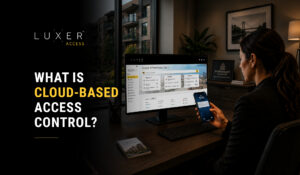
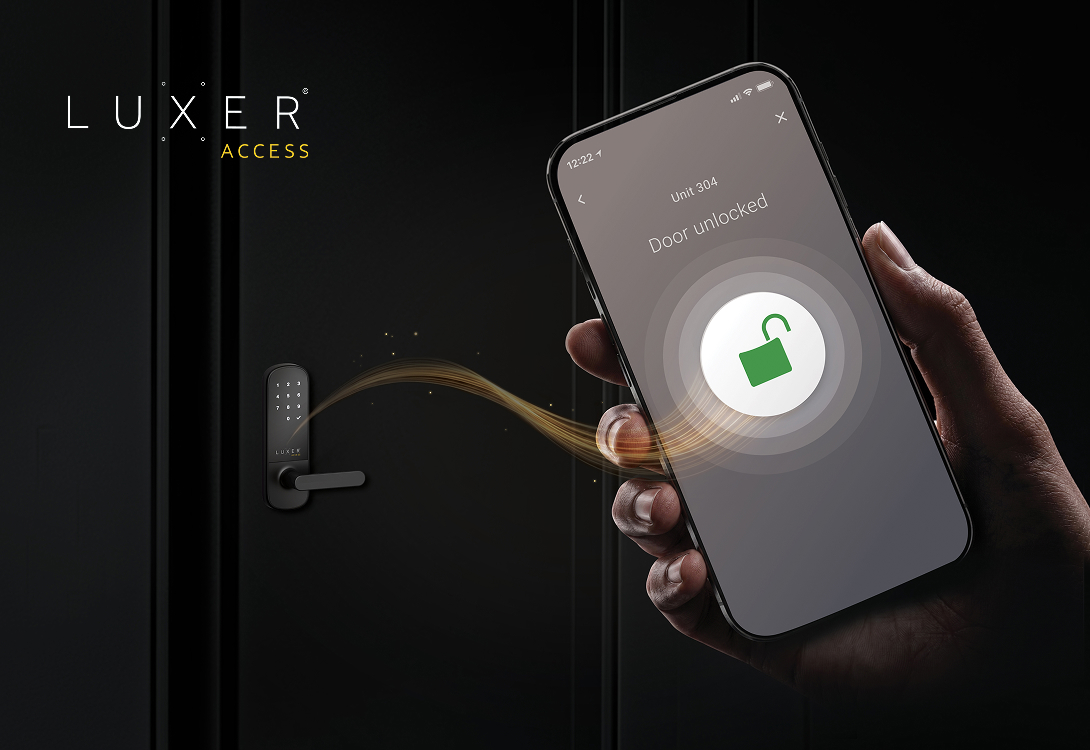
Cloud-based access control works differently. The software and data live in a secure online environment, accessible through a browser or mobile app from any device with an internet connection. Updates happen automatically. There’s nothing on-site to maintain beyond the physical hardware at each entry point.
In practical terms: a property manager can revoke a move-out credential from their kitchen table, pull a six-month audit log from their phone, or add a new maintenance staff member to the system in under a minute, without ever setting foot on the property.
What Keyless Entry Actually Is
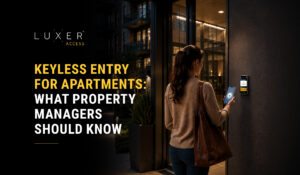
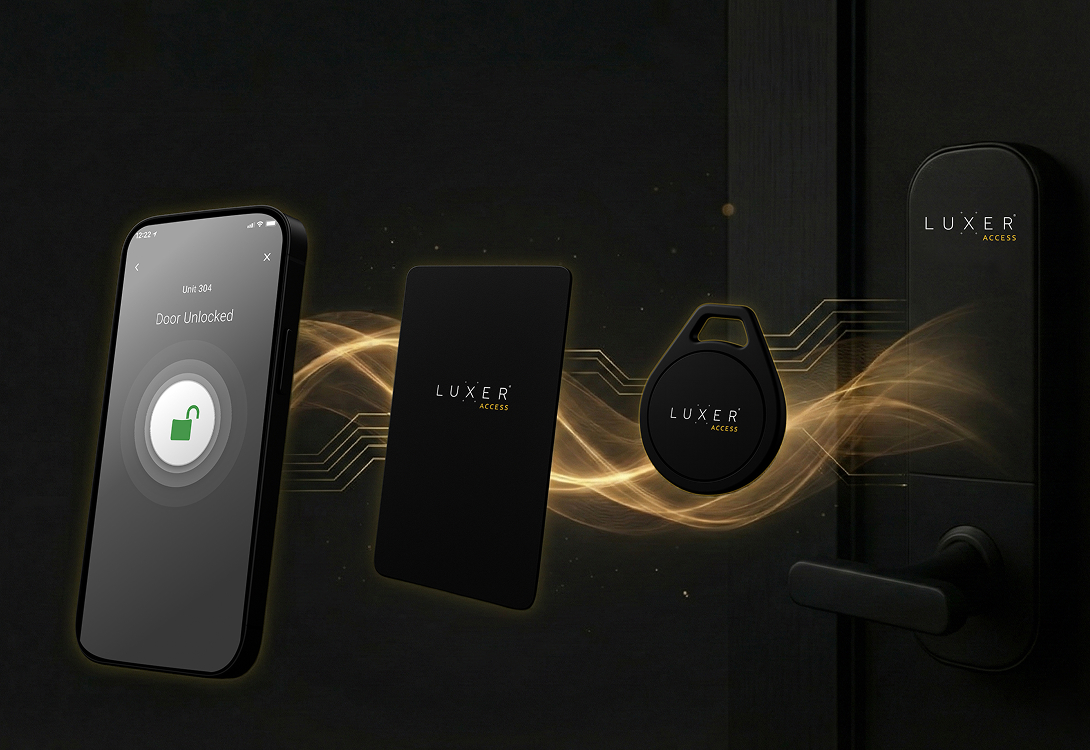
Keyless entry is any system that lets residents and authorized users access a building or unit without a traditional physical key. Instead of metal keys, access is granted through a credential — something the resident carries (a fob or key card), knows (a PIN), or has on their phone (a mobile credential).
In multifamily housing, keyless entry typically applies at three levels:
- Building entry: the front door, lobby, or parking gate
- Common areas: amenity spaces, package rooms, fitness centers, mail areas
- Unit doors: the resident’s individual apartment
The strongest systems handle all three through one platform, so a move-out revokes access everywhere at once — not just at the front door.
The Different Types of Credentials
Key fobs and access cards are the most common starting point for properties moving away from physical keys. They’re familiar and easy to issue, but they carry most of the same problems as traditional keys. Fobs get lost, lent out, or never returned at move-out. Revoking a lost fob requires a manual update, and there’s no way to verify who actually used it or when.
PIN codes skip the physical credential entirely, but shared codes are a persistent security problem. Residents give out their PIN to family members, dog walkers, and housekeepers, and your audit trail becomes unreliable fast.
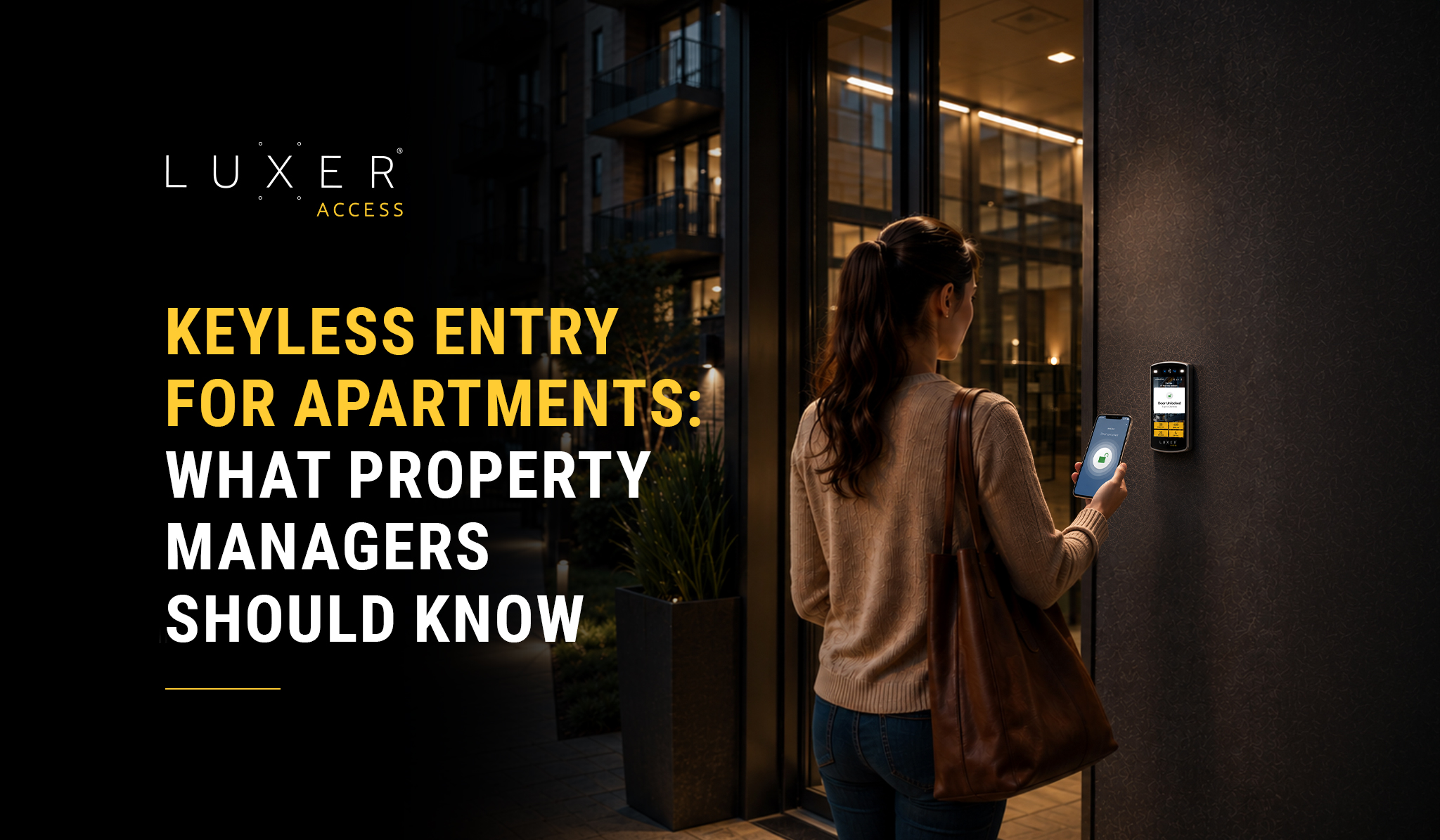
Mobile credentials are where the technology has landed for good reason. A resident’s smartphone becomes their key, accessed through an app or a tap near a reader. Mobile credentials can be issued the moment a lease is signed, revoked the moment a lease ends, and suspended instantly if a phone is lost. No new fob to cut, no locksmith call, no gap in security.
Biometric and facial recognition credentials are the newest layer in this stack. Rather than something a resident carries or knows, access is tied to who they are. Video intercoms with facial recognition can verify identity at the door automatically — a resident walks up, the system recognizes them, and the door opens. It’s a smoother experience for residents and a stronger audit trail for operators, since there’s no credential to share, lose, or forget.

Why Properties Are Moving Away From Physical Keys
The case for going keyless comes down to three things: cost, security, and time.
Cost. Rekeying a unit after every move-out is a recurring expense that adds up fast across a large portfolio. With a digital credential system, a move-out means a credential change in the software. That’s it.
Security. A lost physical key creates a security gap that stays open until the lock is rekeyed, which might be days. A lost mobile credential or fob can be revoked in seconds.
Time. Managing physical key inventories, tracking who has what, coordinating key pickup and return at move-in and move-out — it all absorbs staff time that could go toward things that actually move the needle. Digital credential management automates most of that workflow.
The Resident Experience Side
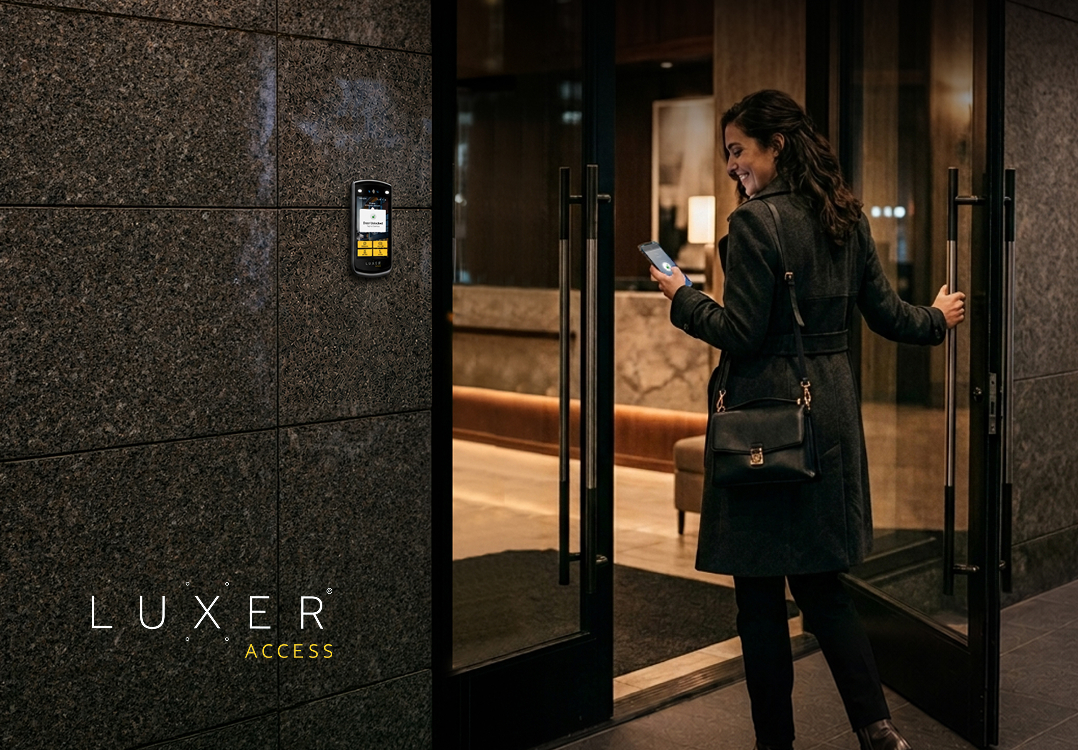
For residents, keyless entry means more than skipping the key ring. The best systems give residents one app that handles every access point in their building — front door, amenity spaces, parking, and their unit. They can grant guest access remotely, get notified when someone enters their home, and never get locked out because they forgot their keys.
That kind of experience has become a real factor in leasing decisions. For properties competing for the same renters, a polished mobile access experience is increasingly something prospective residents ask about and compare — especially those relocating from newer buildings where it’s already the norm.
What to Look for When Evaluating a System
Does it integrate with your PMS?
Keyless entry that syncs with RealPage, Yardi, or Entrata means move-ins and move-outs automatically update credentials. No manual entry, no access lingering after a lease ends.
Does it go all the way to the unit door?
Many access control systems cover the front door and stop there. A complete keyless entry solution extends to individual unit locks, so a move-out closes everything in one action.
What happens during an outage?
Smart locks need a clear answer for power and internet disruptions. Look for systems with local fallback so residents aren’t locked out when connectivity drops.
What does the resident app experience actually feel like?
The credential is only as good as the app that delivers it. An App Store rating in the 4.5 to 5.0 range is a meaningful signal that the resident experience works in practice, not just in demos.
Is the hardware built on open standards?
Some keyless entry vendors use proprietary hardware that locks you into their ecosystem. Systems built on HID standards give you more flexibility as your needs evolve.
How Luxer Access Handles Keyless Entry
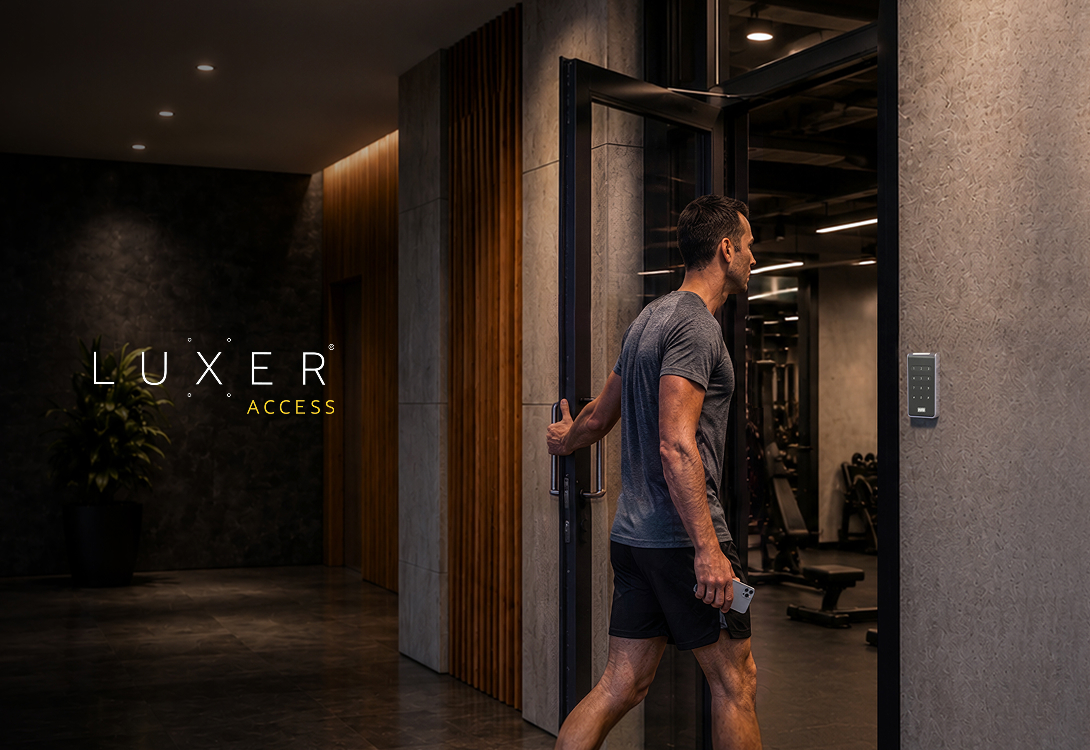
Luxer Access covers keyless entry from the front door to the unit, with HID Signo readers at common access points and smart lock integration at the unit level, all managed through one cloud platform. Residents use one app for everything — building entry, amenity access, their unit door, package pickup, and guest management.
Because the platform integrates natively with RealPage, Yardi, and Entrata, credential management follows the lease cycle automatically. And because Luxer Access manages every phase of the project — specification, installation, go-live, and ongoing support — there’s one team accountable for how all of it works together.
The hardware runs on ASSA ABLOY platform, which secures access in hospitals, government facilities, and enterprise campuses worldwide. For multifamily properties, that means enterprise-grade reliability without enterprise-level complexity.
See how Luxer Access manages keyless entry across the full property at luxeraccess.com.